
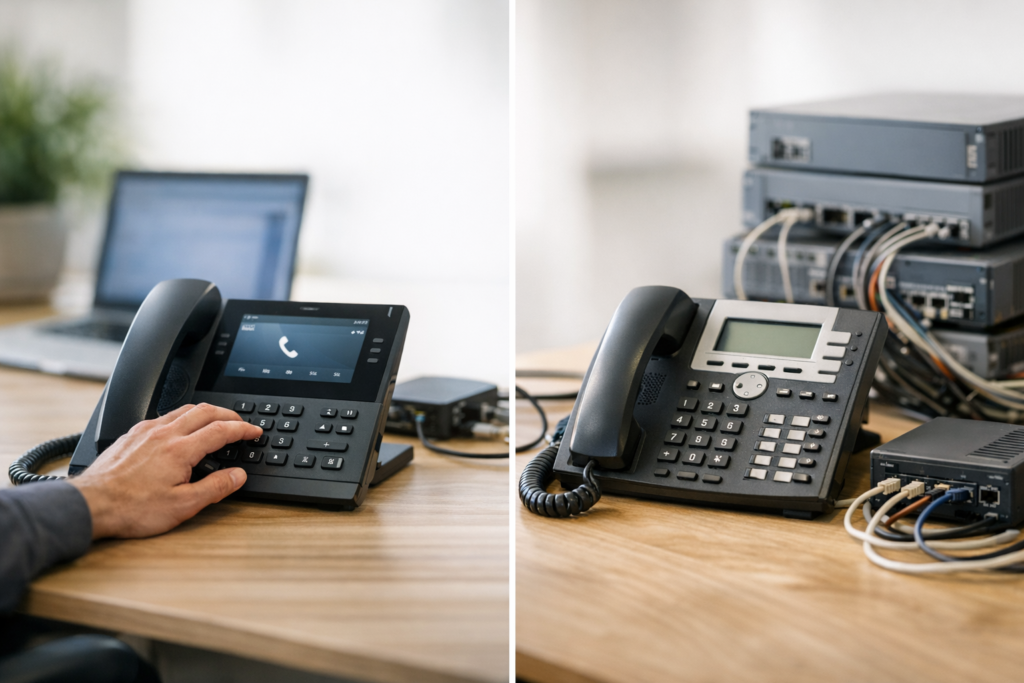
As organizations expand, one of the first systems to show its age is often their phone infrastructure. Teams grow, departments multiply, and suddenly the traditional PBX (Private Branch Exchange) system that once worked “just fine” becomes a bottleneck—too rigid, too expensive, and too difficult to scale. Every new hire needs a desk phone, an added physical line, more hardware configuration, and another bump in maintenance costs.
Meanwhile, modern VoIP technology has evolved far beyond basic internet calling. Businesses that adopt a VoIP phone system for business can now manage communications from anywhere, add new business phone numbers instantly, and eliminate thousands of dollars in hardware expenses.
If your organization is evaluating whether to stay with a PBX system or transition to a business VoIP phone service, this guide will walk you through a detailed, real-world 12-month cost comparison. You’ll learn where hidden expenses occur, what scalability really costs, and why VoIP has become the communication standard for growing teams.
Phone Service Now works with medium to large organizations nationwide to modernize their communication systems, and this breakdown will help you understand exactly where the savings come from—and how to calculate them for your own team.
Understanding How Traditional PBX Business Phone Service Costs Add Up Over Time
Traditional PBX systems aren’t just outdated—they’re expensive to maintain. Most businesses underestimate the long-term costs because they’re spread across multiple areas: hardware, installation, licensing, repairs, and service contracts.
Below are the most common cost categories for PBX systems over a 12-month period:
1. Hardware & Installation Costs
PBX systems require physical servers, desk phones, wiring, and on-site installation. Even a moderate-sized organization can spend thousands just to get the system operational.
Typical Year-One PBX Costs:
- Hardware server: $3,000–$10,000
- Desk phones: $100–$300 per device
- Installation labor: $1,000–$3,000
And these costs often repeat every time a team expands or upgrades hardware.
2. Ongoing Maintenance & Repairs
Traditional PBX systems require regular servicing from specialized technicians. Unexpected failures can mean downtime—something no modern business can afford.
Common Costs:
- Annual maintenance contracts: $1,200–$5,000
- Emergency repairs: $200–$500 per incident
- Hardware replacements: $100–$800 per device
These expenses grow significantly as personnel counts rise.
3. Limited Scalability
Adding new business phone numbers requires:
- A technician visit
- Physical wiring or port activation
- Licensing fees
The scalability model is outdated and costly.
In contrast, VoIP expands instantly without added hardware, and without service visits.
Why VoIP Phone Systems Deliver Predictable, Lower 12-Month Costs
Organizations transitioning from PBX to business phone VoIP systems consistently save 30–60% over the first year. VoIP replaces costly hardware with cloud-based technology, providing flexibility without compromising reliability.
Here’s how VoIP reduces expenses month after month:
1. No Hardware, No On-Site Installations
VoIP requires only an internet connection and a device—laptop, smartphone, or IP phone—meaning no server rooms, no hardware failures, and no excessive setup costs.
With Phone Service Now, businesses can scale from 10 to 500+ users without purchasing expensive physical equipment.
2. Lower Monthly Service Fees
Traditional PBX systems charge per line and often include add-on fees for voicemail, call routing, or auto attendants. VoIP delivers all of these features at a fraction of the cost.
Most VoIP Providers Offer:
- Unlimited nationwide calling
- Advanced call routing
- Auto attendant
- Voicemail-to-email
- Mobile/desktop apps
With predictable monthly pricing, budgeting becomes effortless.
3. Instant Scalability with Digital Phone Numbers
Instead of physically wiring new lines, VoIP allows businesses to add or remove business phone numbers from an online dashboard within minutes.
This alone can save hours of admin time and eliminate technician fees entirely.
4. Remote Work Compatibility
Traditional PBX systems were not designed for distributed teams. VoIP connects your entire workforce—office, remote, or hybrid—under one unified system.
This flexibility increases operational efficiency and eliminates the need for multiple communication platforms.
12-Month Cost Comparison: PBX vs. Business VoIP Phone Service
Below is a realistic comparison of what a 25-user organization might spend on PBX vs. VoIP over 12 months.
Traditional PBX System (25 Users)
Cost Category
Year-One Cost
Hardware + installation
$12,000–$18,000
Desk phones
$3,000–$7,500
Maintenance contract
$2,000–$5,000
Repairs/technician visits
$500–$1,500
Expansion costs
$500–$2,500
Total 12-Month PBX Cost
$18,000–$34,500
VoIP Phone System for Business (25 Users)
Cost Category
Year-One Cost
VoIP service ($20–$35 per user/mo)
$6,000–$10,500
Optional IP phones
$2,000–$4,000
Setup/onboarding
Free–$500 (varies by provider)
Expansion costs
$0
Maintenance
$0 (cloud managed)
Total 12-Month VoIP Cost
$6,000–$15,000
Average first-year savings with VoIP: $12,000–$20,000
This is why more mid-sized and large organizations are eliminating PBX systems altogether—the ROI is clear, immediate, and measurable.
How VoIP Improves Communication Beyond Cost Savings
While price matters, organizations often adopt VoIP for the operational benefits it introduces. A modern VoIP phone system for business improves workflow, collaboration, and customer service.
1. Unified Communication
VoIP integrates:
- Phone
- Messaging
- Call routing
- Video conferencing
- Collaboration apps
PBX systems cannot offer this level of versatility.
2. Enterprise-Level Security
Reputable VoIP providers use encrypted, cloud-based systems with redundant data centers to ensure uptime and protect sensitive communication.
3. Advanced Call Analytics
VoIP systems provide reporting on:
- Call duration
- Call volume
- Agent performance
- Missed call tracking
This data helps leadership optimize operations and staffing.
4. Integration With Business Software
VoIP platforms often connect with tools such as:
- CRMs
- Project management systems
- Ticketing software
- Helpdesks
This reduces manual work and shortens customer response times.
Why Phone Service Now Delivers the Best VoIP Phone Service Experience
Phone Service Now specializes in scalable, enterprise-ready business VoIP phone service that eliminates the headaches associated with PBX systems. We support businesses with 10–500+ team members and tailor communication systems to fit their operational needs.
Our VoIP Solutions Include:
- Unlimited calling
- Automated attendants
- Mobile & desktop apps
- Easy number porting
- Dedicated support
- Seamless onboarding
- Scalability for growing teams
Instead of navigating confusing pricing and outdated technology, organizations partner with Phone Service Now for a streamlined, reliable VoIP migration that pays for itself in the first year.
Ready to Reduce Communication Costs and Upgrade Your Phone System?
Transitioning from a PBX system to a modern VoIP solution can save your organization thousands over the next 12 months—while also delivering better performance, flexibility, and scalability.
If you’re ready to find the best business cell phone plans for your business and explore the right system for your team, get in touch with our experts at Phone Service Now. We’ll walk you through options, pricing, and implementation so you can make the smartest decision for your business.